
I write to you all the explanation in creating spells that manifest for you in your journey of a witch.
Preparing oneself is a crucial first step in any meaningful magical working, for the task of consciously altering the fabric of reality is no simple feat. Fortunately, the tools required are quite basic and accessible – all that is needed is a few simple supplies like scratch paper, a writing implement, some index cards, and a selection of trusted magical reference texts.
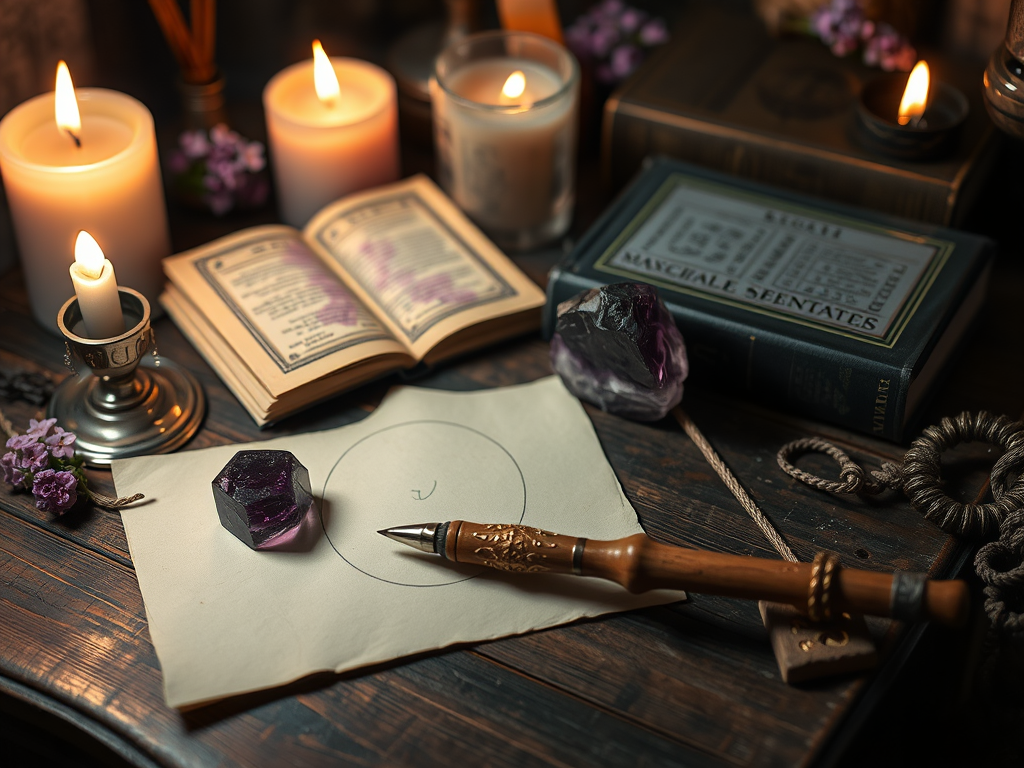
These humble materials become the foundation upon which one can construct a focused, intentional ritual space. An optional addition might be the assembly of a small altar, where talismanic objects can be arranged to inspire and empower the magician’s creative faculties. For instance, the soothing violet hues of an amethyst crystal can help sharpen one’s intuition, while the flickering flame of a lilac or honeysuckle-scented candle can invigorate the mind.
And to fully relax into the work ahead, a soothing cup of chamomile tea can be a grounding, calming presence. With this basic setup, the magician is primed and ready to turn their attention to the specific goal they wish to manifest. Whether it is a need for enhanced prosperity, a desire to formally dedicate oneself to a new path of study, or the intention to cleanse and purify a physical sacred space, the next step is to clearly articulate the intention on paper, folding it into a small tent-like structure to keep the focus sharp and unwavering.
With the self prepared and the intention clearly defined, the magician can then proceed confidently into the heart of the ritual work, secure in the knowledge that the foundation has been properly laid.

Positioning the tented paper on one side of your workspace serves as an essential signpost and source of inspiration as you craft your spell. This simple yet powerful act creates a visual focal point, drawing your attention and energy towards the task at hand.
The upright paper functions as a tangible representation of your magical intention, a physical manifestation of the change you seek to bring about. As you work, your gaze will naturally return to this little signpost, reminding you of your purpose and imbuing each step of the spellcasting process with renewed focus and determination.
The tented paper becomes a steady beacon, guiding you through the ebb and flow of the ritual, anchoring your mind and spirit to the desired outcome. This humble setup is more than just a practical consideration – it is a deliberate act of sacred space-making, a way of consecrating your workspace and aligning your inner and outer worlds. Just as a wayfinding sign on a long journey helps keep you on track, this upright paper serves as a touchstone, a constant source of motivation and inspiration as you weave the intricate tapestry of your spell. In the face of any doubts or distractions, this little signpost will stand firm, reminding you of your power and the transformative magic you are about to unleash.
Now that you have established this guiding presence, you can turn your attention to gathering the necessary tools for your spellcasting. The very act of selecting the materials you will use is imbued with deep significance, as each item you choose can contribute to the overall energy and efficacy of your work.
The color, texture, and even the shape of the paper you write on can hold symbolic meaning and resonate with your intended outcome. For a prosperity spell, you might choose a vibrant green paper to invoke abundance, while a healing ritual could be enhanced by the earthy tones of recycled kraft paper. Similarly, the writing implement you select – whether a rich red gel pen, a sturdy calligraphy nib, or even a humble pencil – can amplify the power of your words.

The ink color, the flow of the lines, the very act of forming each letter by hand – all of these elements become charged with intention, weaving a tapestry of meaning that infuses your spell with potent energy. And for those who work primarily on digital devices, the act of transferring your spellwork from screen to page can be a powerful ritual in itself, a way of grounding your intentions in the physical realm and connecting with the timeless traditions of magical practitioners throughout history. By carefully selecting and imbuing your tools with significance, you are not only crafting your spell but also forging a deep, personal connection to the work, investing it with your own unique energy and essence.
Before delving into the heart of a magickal writing ritual, it’s crucial to take the necessary preparatory steps to ensure a successful and harmonious experience. The first of these is to ground and center oneself, a practice that helps to gather and stabilize the energies at play. Anyone who has worked with the mystical arts knows the sensation of a “magickal hangover” – the fatigue and disorientation that can linger after an intense session of spell-casting or energy work.
Writing itself is an intensely personal form of magickal practice, tapping into deep wells of creativity and emotion. The energies that are called upon and manipulated during this process must be properly dealt with, lest the writer be left with a debilitating headache and lingering exhaustion. For this reason, it’s highly recommended to take time to ground and center both before and after the writing ritual. This grounding allows the practitioner to sink their roots deep into the earth, drawing up nourishing, stabilizing energies. Centering, meanwhile, brings the disparate strands of one’s focus and power into a coherent, balanced whole. Many spellworkers also use this preparatory time to call upon a muse or patron deity for inspiration and guidance. Those without an established relationship with such a figure may wish to invoke the aid of goddesses like Athena of the Greeks, Brighid of the Celts, or Seshat of the ancient Egyptians – all of whom are strongly associated with the written word, poetry, and the creative arts.
Once the writer has taken the time to ground, center, and invoke any helpful mystical forces, they can then turn their attention to establishing the specific components of the spell or ritual at hand.
A crucial first step is to determine the optimal timing for the working – considerations like the current moon phase, day of the week, time of day, and astrological alignments can all have a significant impact on the potency and effectiveness of the magickal energies at play. For instance, a prosperity-focused spell might be best performed during the waxing moon and around midday, when the Sun’s solar energies are at their peak. Conversely, a rite of initiation or transition would likely be more powerfully enacted at dawn on a Monday, just after the new moon. The writer must also decide whether this will be a solitary working or one involving a group, and whether the ritual will be formal and highly structured or more casual and spontaneous in nature.
From there, they can turn their attention to selecting the specific material components that will be incorporated – items like candles, herbs, incense, stones or crystals, traditional altar tools, and colored altar cloths. For each of these elements, the practitioner should carefully consult correspondence tables and guides, aligning their choices with the overall intention and energetic signature of the spell. As they work with these physical components, the writer should continually refer back to their initial statement of intention, ensuring that their actions and focus remain firmly rooted in and aligned with their ultimate magical goal.
Crafting the spell itself is a crucial step in the magickal process, where you bring your intention and components together to create the words that will channel your energy and manifest your desired outcome. The structure of the spell can vary greatly, from conversational and free-flowing language to tightly-rhymed, metered poetry. Conversational spells can be well-suited for simple, straightforward intentions, as the natural cadence of speech can have a grounded, accessible quality.
However, many magickal traditions favor more poetic structures, as the rhythm and rhyme of verse can imbue the words with a driving, incantatory power. Poetic spells often rely heavily on vivid imagery and evocative metaphor, painting pictures with “beautiful words” that elevate the spell’s overall impact. Whether opting for plain speech or lyrical verse, the key is to let your initial ideas flow freely onto the page without worrying about perfection. Once you have the raw material, you can begin refining the language, consulting dictionaries and thesauruses to find the most potent, descriptive words possible. Reading the spell aloud is essential at this stage, allowing you to hear the sonic qualities and make adjustments to the rhythm and pacing. You may even choose to incorporate physical actions directly into the wording, creating a cohesive, multimedia experience. Ultimately, the goal is to craft a spell that resonates on multiple levels – intellectual, emotional, and energetic – to maximize the likelihood of successful manifestation.
Crafting spells, cleansing sacred spaces, and designing ritual altars are intricate practices that require deep thought and careful consideration. When creating a spell, a practitioner must meticulously choose each element – from the specific wording of incantations to the symbolic objects incorporated. They ponder the intended purpose, analyzing how the various components will work together to channel energy and manifest the desired outcome.
Similarly, the process of cleansing a space involves a methodical clearing of stagnant or unwanted vibrations, often using a combination of smoke, sound, and visualization to purify the atmosphere and realign the environment. The construction of an altar is an equally deliberate endeavor, as the practitioner selects meaningful items to adorn the sacred surface, arranging them with intention to cultivate a potent focal point for ritual work. The placement of candles, crystals, statues, and other talismans is thoughtfully considered, with each element holding deep symbolic significance that resonates with the practitioner’s beliefs and intentions. Through this methodical approach, spellcasting, space clearing, and altar design become powerful conduits for connecting with the unseen forces of the universe and harnessing their transformative energies. The level of mindfulness and care infused into these practices is what imbues them with true magic.
With many blessings to you all on this Friday magical evening,
JourneywithSpirit72


 JourneywithSpirit: Hearth & Home is where the heart begins to heal